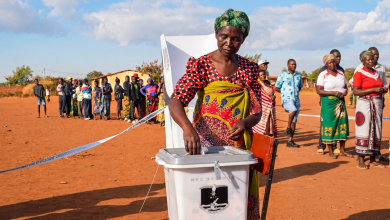
President Lazarus Chakwera’s decision to reconvene Parliament on August 5 to deliberate on the Presidential, Parliamentary, and Local Government (Amendment) Bill—aimed at enabling voter transfers—has been widely recognised as a crucial step in preventing voter disenfranchisement.
This move is grounded in Section 67(4) of the Constitution, which empowers the President to summon Parliament after its dissolution if, in his assessment, a constitutional crisis or emergency arises that demands immediate legislative attention by the National Assembly.

A government notice published in the Malawi Gazette on Friday, reads: “And whereas a matter relating to the exercise of the right to vote enshrined under Section 40 (3) of the Constitution has arisen requiring urgent consideration by the National Assembly and enactment of legislation, with respect to the conduct of the forthcoming general election to be held on 16th September 2025.
“Now, therefore, I, Lazarus McCarthy Chakwera, President of the Republic of Malawi, pursuant to the powers conferred by Section 67 (4) of the Constitution, hereby reconvene the National Assembly to meet on 5th August, 2025 to consider a Presidential, Parliamentary and Local Government (Amendment) Bill.”
Presidential press secretary Anthony Kasunda said in a statement yesterday that the Bill will amend the gaps observed and bring back a provision to allow individuals who are anticipated to be affected on polling day to cast their votes.
Section 74 of the Presidential, Parliamentary and Local Government Act of 2023 states that a registered voter shall exercise his or her right to vote at a polling station located at the registration centre where he or she is registered or has been transferred to.
This current legislation brought discomfort among various electoral stakeholders who feared it would disenfranchise thousands of registered voters, including Malawi Electoral Commission (MEC) staff providing electoral services on polling day and prisoners who were released prior to the voting day, or remain incarcerated.
Others potentially to be affected include security officers such as Malawi Police Service and Malawi Defence Force officers, journalists, party representatives and election observers.
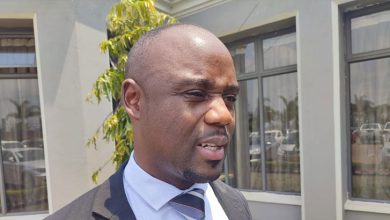
In an interview yesterday, Centre for Human Rights Education Advice and Assistance executive director Victor Mhango said the law must be applied equally and that efforts to strengthen democracy must include all voices, including those behind bars.
“We strongly believe that prisoners should not be excluded from exercising their right to vote. Disenfranchisement should not apply only to polling staff that registered but were transferred after registration. It should also extend protection to prisoners who registered to vote while in their communities but are now in custody,” said Mhango.
“Many of these individuals did not have the opportunity to apply for a voter transfer due to their sudden incarceration. Others were released after transfers had already been conducted, yet their names remain in the voters’ roll. Denying them their right to vote amounts to unequal application of the law and further marginalises a group that is already vulnerable and forgotten.”
He said the principle of universal suffrage, as enshrined in the Constitution and international human rights standards, requires that every citizen, regardless of their incarceration status, be given an opportunity to participate in the democratic processes.
As such, Mhango said being in prison does not strip someone of their citizenship or their inherent political rights.
He, therefore, urged MEC, Malawi Prisons Service and relevant stakeholders to ensure that practical mechanisms are put in place to enable eligible prisoners to vote—especially those who registered but were imprisoned before or during the transfer window.
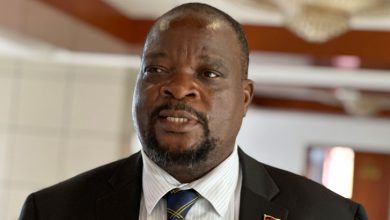
In a separate interview, Centre for Multiparty Democracy executive director Boniface Chibwana said the reconvening of Parliament to deliberate on the issue is progressive.
“No voter should be disenfranchised and everyone should be given a chance to choose leaders of their choice irrespective of the work they will be doing,” he said.
“We have a lot of security agents, roving observers and party agents who will be required to work from elsewhere. The decision by the President to call Parliament should be commended.”
Civil Society Elections Integrity Forum chairperson Benedicto Kondowe said in a statement yesterday the reconvening of Parliament presents a crucial opportunity to reinstate legal provisions that safeguard the right to vote for affected groups.
He said: “This is a victory for democracy, for the Constitution, and most importantly, for every Malawian citizen whose right to vote is protected under Section 40 of the Constitution.
“We further urge members of Parliament to rise to the occasion when they meet. This session must not be reduced to mere procedure—it must produce urgent and deliberate legislation to reinstate special voting provisions that protect voters on official duty. Anything less will weaken electoral inclusivity and legitimacy.”